HEPA against standard filtration
Quick answer
The Shark Navigator ZU503AMZ ($299.99) lists a certified HEPA filter. The Dyson Ball Animal 3 Extra ($394.55) does not list a HEPA filter in its published specification, despite costing more. A certified HEPA filter only performs to its rating when the whole machine housing is sealed around it; a HEPA element fitted into an unsealed body still leaks fine dust around the filter, so the rating alone doesn't guarantee cleaner exhaust air.
Published manufacturer specifications, plus general HEPA filtration and vacuum sealing conventions where noted.
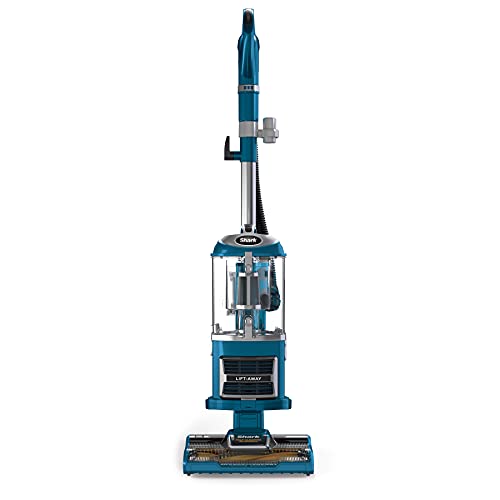
Shark Navigator Lift-Away Vacuum, Self-Cleaning, HEPA, Teal, ZU503AMZ
On the specific specification that matters most for allergy sufferers, a certified HEPA filter, the Shark Navigator ZU503AMZ is the documented choice and costs less than the standard-filtration Dyson in this pairing. Anyone without specific dust or allergy concerns may still prefer the Dyson for other reasons, since HEPA filtration is one spec among several that determine overall performance.
The two sides
- HEPA filtration (Shark Navigator ZU503AMZ)
Shark Navigator Lift-Away Vacuum, Self-Cleaning, HEPA, Teal, ZU503AMZ
Lists a certified HEPA filter at a lower price than the standard-filtration alternative in this pairing.
$299.99 Check pricePrices change often - Standard filtration (Dyson Ball Animal 3 Extra)
Dyson Ball Animal 3 Extra Upright Vacuum
Does not list a certified HEPA filter in its published specification, despite a higher price point.
$394.55 Check pricePrices change often

| Factor | HEPA (Shark Navigator ZU503AMZ) | Standard (Dyson Ball Animal 3 Extra) |
|---|---|---|
| Price | $299.99 | $394.55 |
| Certified HEPA filter listed | Yes | Not listed |
| Format | Upright, self-cleaning brushroll | Upright, corded |
| Bag type | Bagless | Bagless |
| Typical service life | 6 to 10 years | 6 to 10 years |
What a HEPA rating actually certifies
A certified HEPA filter is required to capture at least 99.97 percent of particles at the specific size that passes through filter media most easily, roughly 0.3 microns. That is a real, testable standard for the filter media itself. What it does not certify is the vacuum's entire housing around that filter, which is a separate engineering problem the brand has to solve independently.
Why sealing matters more than the filter rating alone
A vacuum with a certified HEPA filter but gaps or unsealed joints elsewhere in its housing will still leak fine dust around the filter rather than through it, since air always finds the path of least resistance. This is why the phrase "sealed HEPA" is the meaningful spec to look for, not just "HEPA filter" on its own. Manufacturers rarely publish independent sealing test data, so a HEPA-labeled filter is a genuinely useful data point but not a complete guarantee of low-dust exhaust air on its own.
What happens when a HEPA filter gets washed
Some HEPA filters are marketed as washable, but running water through HEPA-rated media permanently collapses its fine fiber structure, even though the filter can look intact and undamaged once it dries. A washed HEPA filter should be treated as no longer meeting its original rating and replaced rather than reused, regardless of how it appears.
- A HEPA rating describes the filter media's particle capture rate, not the whole machine's seal quality.
- A "sealed HEPA system" claim is the more complete spec, since it addresses housing leaks around the filter.
- Never wash a HEPA filter and expect it to retain its rating afterward, regardless of appearance once dry.
What it costs to maintain either filtration path
A certified HEPA filter typically needs replacement on a set schedule, often every six to twelve months depending on household dust load, and using a non-genuine or poorly fitted replacement can reintroduce the same sealing problem a brand-new filter was meant to solve. A standard filter without a HEPA rating is often cheaper to replace and sometimes washable, but washing any filter, HEPA or not, only restores performance if the manufacturer specifically designed that filter to tolerate water. Either way, a filter that's overdue for replacement will quietly reduce suction and filtration quality well before it looks visibly dirty, so following the manufacturer's replacement interval matters more than how the filter looks.
A question people actually ask: is a non-HEPA vacuum bad for allergies?
Not necessarily disqualifying, but it removes one specific, checkable spec that HEPA-rated machines can point to. A non-HEPA machine can still filter reasonably well depending on its overall design and how well its housing is sealed, but there's no independent certification standard confirming that the way there is for HEPA media. For someone with diagnosed dust or pet allergies, choosing a machine with a listed, certified HEPA filter removes uncertainty that a non-HEPA machine simply cannot resolve on paper.
Choose the HEPA-filtered Shark Navigator if dust, pet dander or allergy symptoms are a genuine concern in the household, since a certified filter is a checkable, documented spec. Choose the standard-filtration Dyson if allergy performance isn't a primary concern and other factors, like brand ecosystem or specific design features, matter more to you. A HEPA rating is one meaningful spec among several, not an automatic verdict on which machine is better overall.
Others in this category
An even spread across the price range.
- Bissell
Bissell CleanView Compact, Powerful Suction & Extension Wand, 3508
$59.01 Check pricePrices change often - Hoover
Hoover MaxLife Elite Swivel Vacuum, Bagless Upright Vacuum
$119.99 Check pricePrices change often - Kenmore
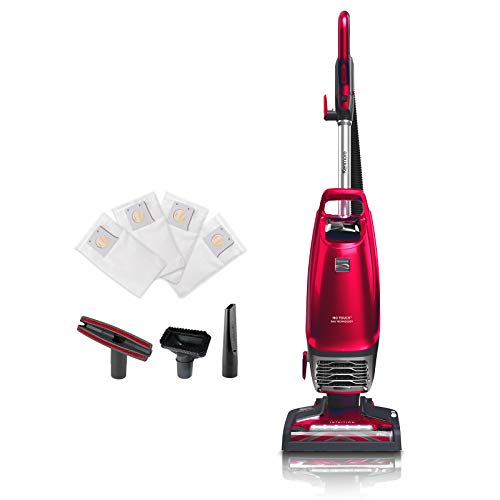
Kenmore Intuition Bagged Upright Vacuum Pet Friendly
$168.30 Check pricePrices change often - Shark
Shark Navigator Lift-Away Vacuum, HEPA, Pet Hair, White/Silver, NV356E
$199.99 Check pricePrices change often




Common questions
Does a HEPA filter alone make a vacuum safe for severe allergies?
It helps, but only if the whole machine housing is also sealed against leaks around the filter. A HEPA-rated filter fitted into an unsealed body still allows fine dust to bypass it through gaps elsewhere, so sealing quality matters as much as the filter rating itself.
Why doesn't the more expensive Dyson list a HEPA filter?
Its published specification simply doesn't include a certified HEPA filter for this specific model. Price differences between vacuums reflect many factors beyond filtration, including motor design, brush technology and brand positioning, so a higher price doesn't automatically include every possible filtration spec.
Can I wash and reuse a HEPA filter to save money?
No. Water passing through HEPA filter media permanently damages its fine fiber structure, even if it looks fine once dried. A washed HEPA filter no longer meets its original certified rating and should be replaced rather than reused.
What does "sealed HEPA system" mean compared to just "HEPA filter"?
A sealed HEPA system claim addresses the entire air path through the machine, confirming that air can't bypass the filter through gaps in the housing. A bare "HEPA filter" claim only certifies the filter media itself, not the rest of the machine around it.
Is bagless filtration weaker than bagged filtration for allergies?
Bagless machines lack the extra filtering layer a bag wall provides, so a certified HEPA filter matters more on a bagless machine to compensate. Both machines in this comparison are bagless, which is one reason the HEPA spec carries extra weight here.
How long do HEPA filters last before replacement?
Most HEPA filters need replacement roughly every 6 to 12 months depending on household dust load and usage frequency, though exact intervals vary by manufacturer and should follow the specific machine's filter replacement schedule.
Every figure here comes from published manufacturer specifications, owner reported measurements and repair documentation, and each is labelled as either a standard or a convention. This is researched general information to help you diagnose and plan, not professional advice, and it cannot tell you what is wrong with one particular machine. Your own manual and the part number printed on your machine are the final word.