Filter replacement schedule
Quick answer
A foam pre-filter wants rinsing about monthly and replacing yearly; a sealed HEPA cartridge is replaced about every six to twelve months and never washed. Pets roughly halve both intervals. Washing a HEPA element destroys the media, so a HEPA filter that has been rinsed is no longer a HEPA filter.
Filter life is driven by what goes through the machine rather than by the calendar, so these are starting intervals. The guidance printed in your own manual wins.
- Replace on schedule. A HEPA element that is washed is no longer a HEPA element.
- Adjusted for: shedding pets.
- This element is not washable. Rinsing a pleated or HEPA filter collapses the media, and it will not recover when it dries.
- The yearly figure uses the current median filter price in our catalog, so it moves when prices move.
Filters and bags
Filters are model specific. Check the part number moulded into your old filter against the listing before ordering.
- KEEPOW
KEEPOW Vacuum Filters Compatible with Bissell Febreze Style 1214
$7.99 Check pricePrices change often - isinlive
2033 Replacement Filter Compatible with Bissell 2033 Series Vacuum Cleaner
$13.99 Check pricePrices change often - MsDaos
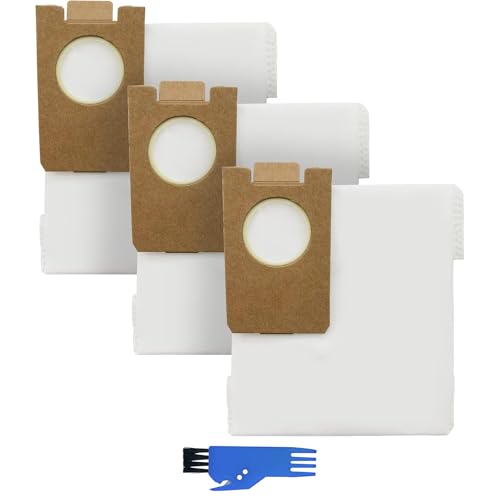
MsDaos Dust Bags for Verefa V60 Pro, V60M Pro, Sysperl Climee, 2L, 3Pack
$17.99 Check pricePrices change often - LemonQueen
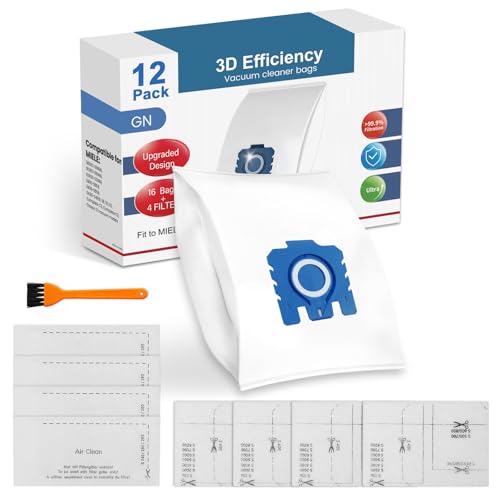
12 Pack 3D Airclean GN Vacuum Cleaner Bags for Miele Classic C1 Complete C1
$24.99 Check pricePrices change often



What this tool does and does not do
It works through the checks in the order a service technician uses, and it tells you what each outcome would mean. It cannot see your machine, so nothing here is a diagnosis of one particular vacuum. Treat every result as a list of things to rule out, and let the part number printed on your own machine have the final word.
No vacuum on this site has been tested by us. Every figure comes from a published manufacturer specification, a defined unit, or a widely used service rule of thumb, and each page says which of those it is using.
Safety
A washable filter needs a full day in open air. A filter refitted damp turns the dust already in the bin into something that grows, and no amount of cleaning afterwards removes the smell.
Common questions
Can I wash a HEPA filter to save money?
No. A HEPA element traps fine particles in a dense mat of randomly laid fibres, and water collapses that structure permanently. A washed HEPA filter looks fine when it dries, passes more air than it should, and no longer captures what it was rated for. If a filter is washable, the manufacturer says so on the filter itself or in the manual.
How long does a washable filter need to dry?
A full twenty four hours, in open air, and longer in a humid room. Refitting a foam filter that is still slightly damp is the single most common cause of a vacuum that smells within a week, because the bin is full of exactly the organic material that needs moisture to go bad. Keeping a second filter to swap in is the usual fix.
Why do pets shorten the interval so much?
Hair and dander load a filter faster than any other household material, partly by volume and partly because dander is fine enough to reach the element instead of settling in the bin. In a home with shedding pets a filter that would last a year is often restricting airflow noticeably by month six, and the symptom reads as the machine getting weaker.
Does a clogged filter actually damage the motor?
It can, over time. The motor in most household vacuums is cooled by the air it moves, so restricting that airflow means it runs hotter than designed. The immediate effect you notice is lost suction; the slower effect is heat shortening the motor life. This is why a filter is the cheapest preventive maintenance available on a vacuum.
My machine has more than two filters. Does that change things?
It changes the cost, not the intervals. Set the filter count above to what your machine actually holds and the yearly figure adjusts. Machines with three or four elements usually split the job into a coarse pre-filter, a motor filter and a sealed exhaust filter, and each one wants its own schedule from the table above.
Where is the exhaust filter, and why does it matter?
It sits after the motor, near the outlet, often behind a clip-in grille at the back or base. It is the one owners forget completely, and it is usually why a machine with fresh pre-filters still puts a smell into the room. On a sealed system it is also the last barrier between the motor brushes and the air you breathe.
Every figure here comes from published manufacturer specifications, owner reported measurements and repair documentation, and each is labelled as either a standard or a convention. This is researched general information to help you diagnose and plan, not professional advice, and it cannot tell you what is wrong with one particular machine. Your own manual and the part number printed on your machine are the final word.