Foam pre-filter life in an allergy or asthma household
Quick answer
In an allergy or asthma household, a foam pre-filter wants rinsing about every 20 days and replacing about every 8 months, against 30 days in an average home. Rinse monthly, dry fully for 24 hours before refitting.
A widely used service rule of thumb rather than a specification. Treat it as a starting point and let your own manual win.
| Household | Service interval | Replace interval | Filters a year |
|---|---|---|---|
| A home with shedding pets | 17 days | 7 months | 1.8 |
| An allergy or asthma household | 20 days | 8 months | 1.5 |
| Pets in an allergy household | 11 days | 4 months | 2.7 |
| A mostly hard floor home | 39 days | 16 months | 0.8 |
| A deep pile carpet home | 23 days | 9 months | 1.3 |
| A machine used weekly or less | 45 days | 18 months | 0.7 |
| Factor | Effect | Why |
|---|---|---|
| Shedding pets | Shortens to 55% | Hair and dander load a filter faster than anything else in a home. |
| Allergy or asthma household | Shortens to 65% | A loaded filter leaks fines back into the room, which is the one thing the filter exists to prevent. |
| Deep pile carpet | Shortens to 75% | Pile holds a reservoir of fine dust that keeps feeding the filter. |
| Mostly hard floor | Extends to 130% | Hard floor debris is coarser and is caught by the bin rather than the filter. |
| Building work nearby | Shortens to 30% | Fine construction dust will block a household filter in days. |
| Used weekly or less | Extends to 150% | Less air through the element means a longer life, within reason. |
Filters and bags
Shown across the price range rather than cheapest first, so the grid reflects the whole category.
- KEEPOW
KEEPOW Vacuum Filters Compatible with Bissell Febreze Style 1214
$7.99 Check pricePrices change often - isinlive
2033 Replacement Filter Compatible with Bissell 2033 Series Vacuum Cleaner
$13.99 Check pricePrices change often - MsDaos
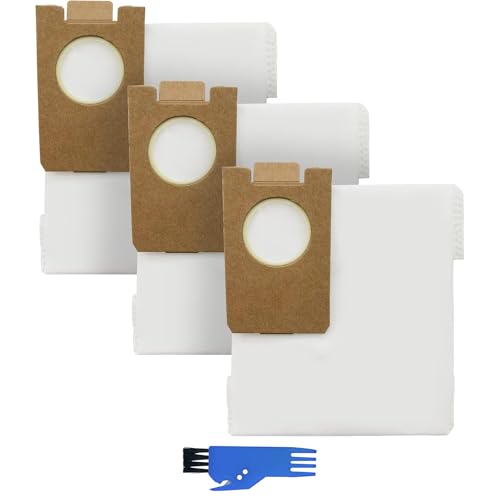
MsDaos Dust Bags for Verefa V60 Pro, V60M Pro, Sysperl Climee, 2L, 3Pack
$17.99 Check pricePrices change often - LemonQueen
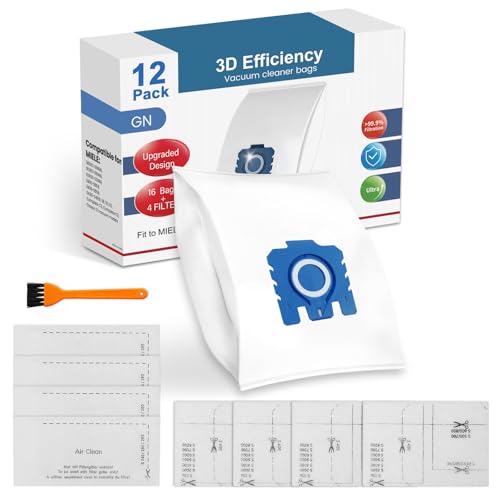
12 Pack 3D Airclean GN Vacuum Cleaner Bags for Miele Classic C1 Complete C1
$24.99 Check pricePrices change often



Why an allergy or asthma household changes the answer
A loaded filter leaks fines back into the room, which is the one thing the filter exists to prevent.
The effect compounds rather than averaging out. Two factors that each shorten an interval multiply together, which is why a single strong factor can still halve a schedule that looked generous on paper. Filter life is driven by what passes through the machine, and the calendar is only a proxy for that.
Cleaning it properly
Rinse monthly, dry fully for 24 hours before refitting. The part people get wrong is drying. A washable element needs a full twenty four hours in open air, and longer in a humid room, because refitting one that is still faintly damp turns the dust already sitting in the bin into something that grows. That is the usual reason a machine with fresh filters still smells within a week.
Keeping a second filter so you can swap rather than wait is the standard fix, and at from $7.99 it is cheap insurance against a week of not vacuuming.
What a blocked filter actually costs you
The immediate effect is lost suction, because a restricted element throttles airflow through the whole machine and airflow is what carries dust into the bin. The slower effect is heat: the motor in most household vacuums is cooled by the air it moves, so a blocked filter means it runs hotter than it was designed to for as long as the blockage lasts.
Against a motor, the arithmetic is not close. Keeping to this schedule on a two filter machine runs at roughly $45.87 a year using current catalog prices, and that is the whole cost of the cheapest preventive maintenance a vacuum has.
Common questions
How often should I change a foam pre-filter with allergy or asthma household?
About every 8 months for replacement, with a rinse roughly every 20 days in between. In an average home the same element would go about 30 days between services, so this household shortens the interval meaningfully and the difference is worth keeping to.
Can I tell by looking whether a filter needs changing?
Not reliably, which is why a schedule beats inspection. Hold it up to a bright light: a serviceable filter passes visible light across its whole area, while a loaded one looks grey and passes almost none. Fine dust sits inside the pleats rather than on the face, so a filter that has been tapped out can look clean and still be restricting airflow badly.
How long does it need to dry?
A full twenty four hours in open air, and longer in a humid room. This is the step people skip and it is the single most common cause of a vacuum that smells within a week of being cleaned, because the bin is full of exactly the organic material that needs moisture to go bad. Keeping a spare filter to swap in removes the temptation.
Does the number of filters in the machine change the schedule?
It changes the cost rather than the intervals. Most machines carry at least two elements, a pre-filter near the bin and an exhaust filter after the motor, and each wants its own schedule from the table above. The exhaust filter is the one owners forget completely, and it is usually why a machine with fresh pre-filters still puts a smell into the room.
Is a cheap third party filter as good as the branded one?
Sometimes, and the thing to check is the specification rather than the brand on the box. A filter that names the media grade and the model it fits is a different proposition from one that lists forty models and no specification at all. On a sealed HEPA machine in particular, a poorly fitting element leaks around the edge and the rating becomes meaningless.
Every figure here comes from published manufacturer specifications, owner reported measurements and repair documentation, and each is labelled as either a standard or a convention. This is researched general information to help you diagnose and plan, not professional advice, and it cannot tell you what is wrong with one particular machine. Your own manual and the part number printed on your machine are the final word.