Obstacle avoidance (structured light or a second camera) in townhouse or large apartment
Quick answer
A forward sensor identifies objects in the path and steers around them. In townhouse or large apartment at around 1400 square feet, that matters: the feature that decides whether a pet accident becomes a whole floor problem.
Published manufacturer specifications and defined units. The figures are the makers' own, not measurements taken here.
| System | How it works | Strength | Limitation |
|---|---|---|---|
| Lidar (a spinning laser turret) | A laser rangefinder sweeps the room and builds a dimensioned map. | Accurate maps, tidy parallel rows, works in the dark, supports no-go zones and multi floor maps. | The turret adds height, so the robot may not fit under low furniture. |
| vSLAM (a camera looking up) | A camera picks landmarks on the ceiling and walls and works out position from how they move. | Lower profile, so it gets under more furniture, and cheaper to build. | Needs light. In a dark room it falls back to a less accurate mode. |
| Gyroscope and bump | Dead reckoning from wheel rotation and an inertial sensor, correcting when it hits something. | Cheap, and genuinely fine in a small flat with simple rooms. | No persistent map, so no zones, no room selection, and missed patches in complex layouts. |
| Obstacle avoidance (structured light or a second camera) | A forward sensor identifies objects in the path and steers around them. | The feature that decides whether a pet accident becomes a whole floor problem. | Recognition is not perfect, and a camera based system is a camera in your home. |
| Figure | Value |
|---|---|
| Floor area | 1,400 sq ft |
| Runtime needed at a realistic pace | about 75 min |
| Onboard bin emptied roughly every | 3 days |
| Self emptying base holds | 2 to 3.5 litres, about 4 to 8 weeks |
Robots across the range, and the consumables they take
Shown across the price range rather than cheapest first, so the grid reflects the whole category.
- Sinnya
4 Pack Type Y HEPA Vacuum Bags for Hoover Windtunnel Upright Style Y, Z, YZ
$8.09 Check pricePrices change often - isinlive
Type C/Q Vacuum Bags Replacement for Kenmore, 15 Pack
$16.14 Check pricePrices change often - Miele
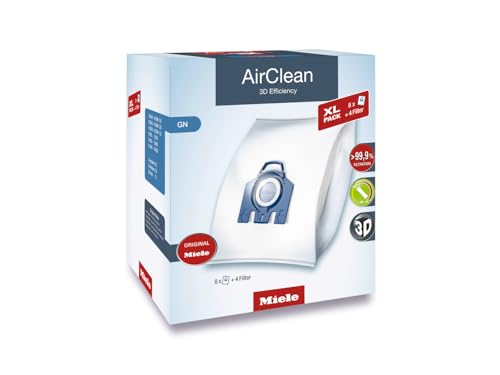
Miele GN Vacuum Cleaner Bags, XL-Pack for Select Miele Canister Vacuums
$39.16 Check pricePrices change often - roborock
roborock Qrevo Edge 2 Robot Vacuum and Mop, 25,000Pa, 3.14'' Ultra-Slim
$1,099.99 Check pricePrices change often




What obstacle avoidance (structured light or a second camera) gets you
A forward sensor identifies objects in the path and steers around them. The feature that decides whether a pet accident becomes a whole floor problem.
The cost is real though: recognition is not perfect, and a camera based system is a camera in your home.
Whether it is worth it at 1400 square feet
At this size the answer is usually yes, and the reason is the map rather than the cleaning. A home this large takes about 75 minutes to cover at a realistic pace, which means zones, room selection and resume after charging stop being conveniences and start being the difference between the floor getting done and not.
What changes the calculation regardless of size is clutter and pets. Obstacle avoidance is the feature that decides whether one bad night becomes a whole floor problem, and no amount of mapping accuracy substitutes for it.
The dock is the other half of the decision
A self emptying base moves the chore from every run to roughly every month or two, which is the single feature most owners say they would not give up. It costs bag money, adds noise for about twenty seconds, and takes real floor space.
In townhouse or large apartment an onboard bin wants emptying roughly every 3 days, and a bin that is full stops picking up well before it looks full because the airflow path is restricted. That frequency, rather than the navigation, is what most owners find decides whether the robot stays in use.
Common questions
Do I need obstacle avoidance (structured light or a second camera) in townhouse or large apartment?
In a home this size it earns its place, mostly through the map rather than the cleaning itself. The feature that decides whether a pet accident becomes a whole floor problem. A floor this large takes about 75 minutes to cover, so the ability to run a room at a time and resume after charging is what keeps the job finishing.
What is the difference between lidar and vSLAM in practice?
Lidar sweeps a laser and builds a dimensioned map, so it works in the dark and produces tidy parallel rows, at the cost of a turret that raises the machine and may stop it fitting under low furniture. vSLAM watches landmarks with an upward camera, sits lower, costs less, and falls back to a less accurate mode in a dark room.
Is obstacle avoidance worth paying for?
In a home with pets or children on the floor, it is the feature most owners would keep if they could only keep one. It is what decides whether a single accident stays a small problem or gets tracked across an entire floor overnight. Recognition is not perfect on any system, and a camera based one is a camera in your home, which is worth deciding on deliberately.
How often will I empty the bin?
In townhouse or large apartment, roughly every 3 days with regular running. Worth knowing that a robot bin restricts airflow noticeably before it looks full, so emptying on a schedule rather than on appearance is what keeps the pickup consistent.
Does a self emptying base replace the need for good navigation?
No, they solve separate problems. The base decides how often you are involved, and the navigation decides whether the machine covers the floor properly and can be told where to go. A robot that empties itself but wanders randomly still misses rooms; one that maps perfectly still needs its bin emptied every few days without a base.
Every figure here comes from published manufacturer specifications, owner reported measurements and repair documentation, and each is labelled as either a standard or a convention. This is researched general information to help you diagnose and plan, not professional advice, and it cannot tell you what is wrong with one particular machine. Your own manual and the part number printed on your machine are the final word.